
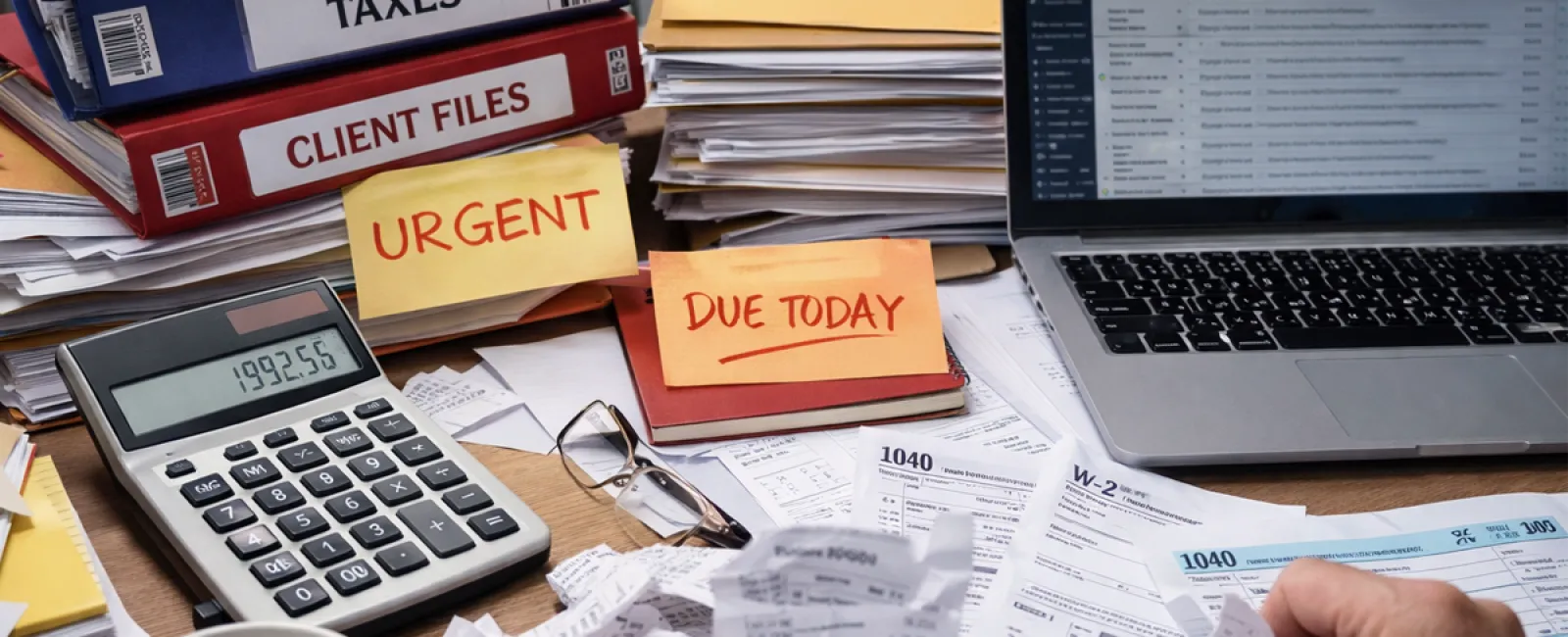
March has arrived.
Accountants are swamped. Bookkeepers are overwhelmed. Deadlines are rushing in fast. Emails multiply beyond manageable.
Everyone is heads-down, just trying to navigate through this hectic month.
This scenario is all too familiar.
Unfortunately, hackers are well aware of this too.
Security analysts report a notable surge in phishing attacks during tax time, with March seeing about a 28% rise in tax-related scam emails compared to calmer months. These scams are subtle—crafted to mimic typical business communications when everyone is busiest.
This is no coincidence.
This is strategic timing.
Let's explore what's coming and four straightforward methods to protect your business from becoming an easy target.
Stress in the Supply Chain
Here's a critical insight many overlook:
Hackers don't only focus on accounting firms.
They exploit the surrounding chaos.
During tax season:
- Clients hurriedly send sensitive documents
- Staff bypass usual verification steps to cope with the workload
- Requests like "Just send me the file" replace careful review
- Verification processes get skipped due to overwhelming demands
The entire workflow accelerates.
And speed leads to mistakes.
Hackers target fast-paced, pressured businesses—not the calm and cautious ones.
March is exactly that busy.
Realistic Examples of These Attacks
This is no fiction.
These scam emails blend seamlessly with your everyday inbox.
- An email "from your accountant" requesting resubmission of W-2s due to missing files
- A vendor message claiming bank account details have changed, urging immediate update
- A DocuSign link demanding urgent signature on a tax document
- An urgent plea from "your CEO" traveling and needing immediate assistance
None of these raise alarms.
They feel like routine business during a busy March.
That's precisely why they succeed.
Why Fast-Paced People Fall Victim
This isn't carelessness.
It's simply human nature.
When inboxes overflow and deadlines loom, people skim emails instead of reading thoroughly. They make assumptions and react quickly.
Scammers leverage this behavior.
Their emails are designed to slip past those who are too busy to catch subtle errors. They don't ask for recklessness, only for your attention to be divided.
And in March, that divided attention is universal.
Four Essential Habits to Avoid Being an Easy Victim
The good news is, you don't need high-end security systems to strengthen your defenses.
Just adopt a few deliberate habits during peak periods.
1. Confirm payment changes by phone
If you receive an email about a vendor's bank details changing, avoid replying directly.
Instead, call a trusted number to verify the change verbally.
This simple step blocks many costly scam attempts.
2. Take your time on sensitive requests
Urgency is often a red flag, not a cue to rush.
If requested to send W-2s, tax info, or financial files "immediately," pause first to verify.
Legitimate senders understand brief delays; scammers won't tolerate checks.
3. Validate urgent emails via another method
If an email flags urgency, confirm via phone call, text, or internal message.
This quick verification can prevent costly mistakes.
True emergencies withstand a two-minute scrutiny; fraudulent ones crumble.
4. Alert your team proactively
Remind your staff this week that tax season is peak scam time.
Encourage them to slow down, double-check, and ask questions whenever something feels suspicious.
This simple culture shift saves headaches down the road.
Key Takeaway
Tax season is stressful enough—don't add falling for scams to your worries.
The attacks aren't revolutionary, just expertly timed.
They exploit rushed people.
They thrive on assumptions.
They exploit the March rush.
You don't need a total system overhaul to stay safe.
Simply slow down at key moments and validate urgent requests.
That alone makes a significant difference.
Stress-Season Security Check
Your business may already have great practices—and that's excellent.
If tax season tends to force reactive behaviors, or if you're uncertain how your team manages urgent requests under pressure, consider a free Call With Our CEO checkup.
No gimmicks. No pressure. Just a straightforward evaluation of small habits that can prevent major headaches during high-stress months.
If this message doesn't fit your business, please forward it to someone it might help.
Click here or give us a call at 929-523-2921 to schedule your free Call With Our CEO.


